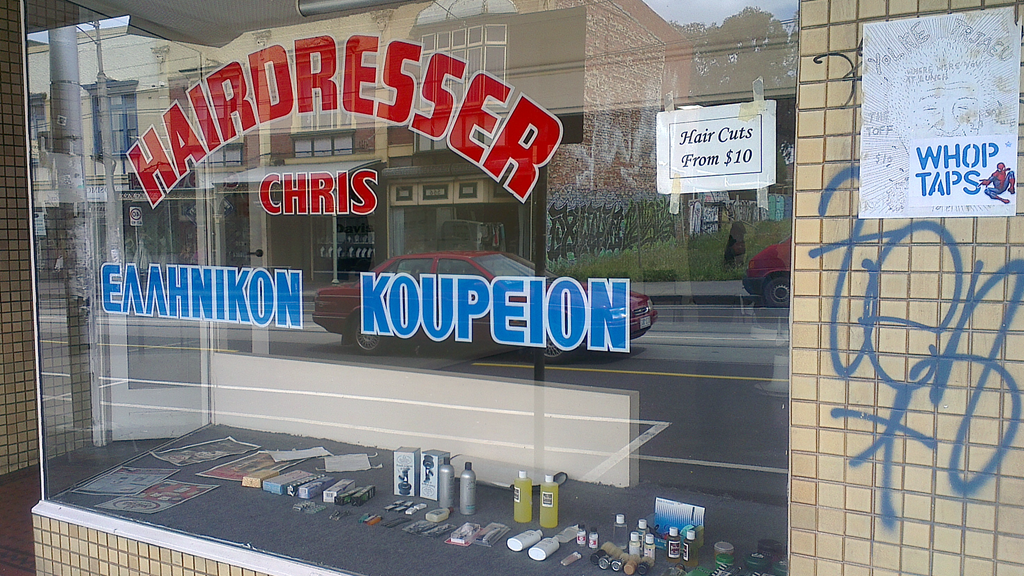
Walking into my Greek hairdresser for regular cut, I was shocked to see Chris the barber appear with a badly bruised face. What happened? With a half-smile, he told me he’d been knocked down by a car crossing a busy road, left in a coma for days. ‘That’s terrible, Chris.’ But he laughed, ‘Don’t worry, I have luck!’ He dug his hand under his shirt collar and pulled out a crucifix. ‘This protects me.’ He then told me about how he was given this special object in a Greek monastery.
Listening in the barber’s seat, I felt pleased for Chris. But walking home questions began to arise. Is he really lucky? I wasn’t wearing a crucifix, and I haven’t been hit by a car. He wears a crucifix and he is nearly killed. No, it’s not the objective reality of luck that seems to matter to Chris, it’s more the positive perspective he brings to it. For Chris, things could always be worse. Sure you’ve been struck by a car, but then you could have been killed. Chris feels lucky. And he has a long-lasting cultural platform to support this feeling. He is lucky.
But what about doubters like myself? Is there a way of feeling lucky without subscribing to belief that a mysterious hand is guiding events in our favour? Previous generations have inherited cosmologies and superstitions that give a semblance of order behind the random occurrences that can disrupt our lives. In abandoning such childish beliefs, have we lost a potentially positive frame through which to look forward?
I raised this with my sister-in-law, a superbly intelligent professor of international law who just happened to be struck with the curse of a terminal bowel cancer. She was committed to every possible practical treatment, from medical technology to strict diet. Nothing was left to chance. Yet underpinning all this was the critical element of hope. ‘In the end, you have to believe in something.’
The challenge then is to think of luck as something can be constructed, rather than imbibed magically through traditions or new age fantasies. To create luck by design seeks to create a space in which fortune can appear. This is the space where stories appear. The core element in any narrative is unpredictability—then what happened? By contrast with the predictable routines of daily life, stories allow for surprise. It’s this shared vulnerability to chance that connects people together.
Today, the creation of luck draws on a mixture of past and present sources, including collective traditions, personal invention and professional design.
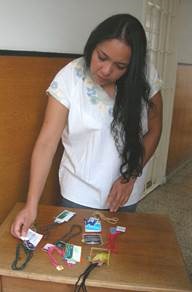
Civilisation is an ongoing project. Just as crafts like pottery were honed over millennia, so techniques evolved for warding off impalpable fears. There have been substances that presage the future, such as tea leaves. Mysterious symbols have inspired confidence, like the four-leaf clover. Fragments of rare substances, as in medieval reliquaries, evoke a powerful aura. In addition to inherited traditions, many individuals invent their own ways to pass on luck to friends or family. A personal customised charm might prove effective in evoking a friendship that will survive through thick and thin. And now there are some designers, particularly jewellers, who are re-casting traditions to invent a modern amulet, tailored to meet new anxieties.
For the applied arts, the challenge of enabling luck promises to connect craft for art’s sake to the relational age.
Craft survived in the 20th century by becoming an art form. Ceramics and jewellery continued to be made by hand as a form of creative expression, rather than objects to be used. But this is unlikely to continue. With ongoing deskilling and dematerialisation, the production of craft masterpieces is declining. One answer is to return to the social basis of craft
There is in the origins of craft an element of design—not necessarily for practical purposes such as holding liquids, but in the architecture of hope within which people gain emotional shelter. The care invested in a handmade gift is a capital that we can carry around to face uncertainties of a life in play.
The project of Luck by Design is to draw from this rich combination of tradition, personal invention and professional practice to create a set of principles at play in the practice of making fortune. While it aspires to the disciplines of a professional practice, it also honours the folk wisdom that has evolved over millennia to raise hopes and ward off fear.
The 88 principles of Luck by Design are intended to evoke the diversity and open-ended nature of creating auspiciousness. Perhaps later, it may be possible to distil these into a system, like colour theory. But for now, we can enjoy its rich legacy, and maybe even contribute something new.
For a brief period, you can download a free copy of Luck by Design. Details here.