Power Sistas

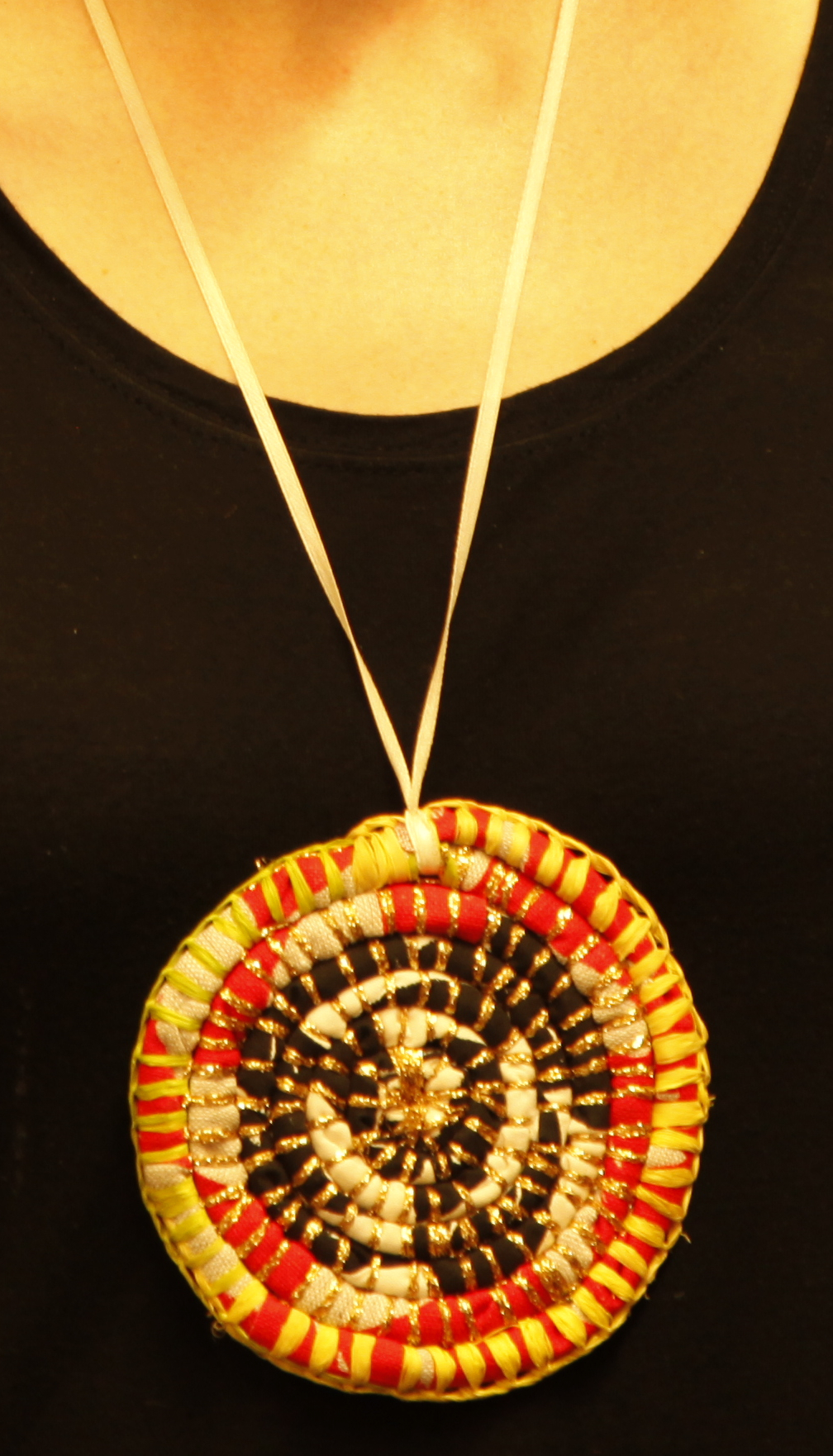
Maryann Talia Pau’s Power Pendants are distributed among a supportive group of ‘sistas’ who wear it on occasions when someone in the circle needs collective encouragement.

Sana Balai

This pendant holds a very special place in my heart; it represents the special love that bonds Maryann and me. It was presented to me by Maryann with a simple message -‘Wear this to remember me while I am gone’, shortly before she and her family returned to Samoa for her grandmother’s 80th birthday in 2011. I proudly did, and still do, honour and appreciate this special mother-daughter kind of relationship between Maryann and me. I also love it for its artistic merits which showcase Maryann’s talent and bright personality.



Namila Benson

The beauty of Maryann’s work is that it truly captures the essence of what it means for me to be an Islander woman; strong, empowered, resilient, engaged, passionate and community-conscious.
Her ‘Power Pendant’ is an extension of all of the above. I recently gave birth to my first child – a beautiful son – and apart from a set of Maryann’s woven earrings, the Power Pendant was the only piece of jewellery I took with me to the hospital.
The reason being that with my son arriving three weeks early, I felt somewhat unprepared to embark on what I knew would be the huge journey of giving birth. So I wore the pendant the day before to help calm me the day before going into labour. And the pendant did for me what I know it is capable of doing for so many others. It strengthened me, reassured me I was safe from harm and mobilised the sisterhood to support me in a profound way (by way of comforting words via mobile, email and social media).
The Power Pendant reflects Maryann to the core.
It’s a work of true beauty, connects – yet reflects – the uniqueness in each of us, has strong artistic merit and once it makes it’s way to our hearts, it finds a place for Life. That’s our Sista. That’s her Creativity. And that’s her Light, which truly shines through her work.
Grace McQuilten

Maryann’s gift surprised and delighted – a gift of pure joy and friendship.
The Power Pendant signifies strength, love, and a little bit of magic. I save it for the times when I am feeling vulnerable, when I am facing difficulty, and also for times of joy and celebration. It has a special place in my heart and links me to Maryann across time and space.


Continue reading

Joyaviva opens in Sydney 31 July

OPENING TUESDAY 31 JULY 6-8PM

JOYAVIVA
LIVE JEWELLERY FROM ACROSS THE PACIFIC 
31 July – 31 August 2012

Curated by Kevin Murray, Joyaviva: Live Jewellery from across the Pacific is an exhibition of beautiful, potent objects that recover the power of jewellery in our world.
 
Made by a new wave of jewellers from Australia, New Zealand and Chile, each of the pieces on display is ‘alive’ as a device for sharing hopes and responding to our fears – ranging from threat of earthquakes to success in a school exam. Created from diverse materials, these objects link people together – transforming private wishes into shared stories.

Melissa Cameron, Jill Hermans, Caz Guiney, Maryann Talia Pau, Jin ah Jo, Blanche Tilden, Alice Whish (Australia)
Jacqui Chan, Ilse-Marie Erl, Sarah Read, Gina Ropiha, Areta Wilkinson, Matthew Wilson, Katheryn Yeats (Aotearoa / New Zealand)
Guillermina Atunez, Francisco Ceppi, Analya Cespedes, Carolina Hornauer, Massiel Mariel, Angela Cura Mendes, Valentina Rosenthal, WALKA STUDIO (Chile)

Visit www.joyaviva.net to learn more about the objects, their creators and hosts.

UTS GALLERY
Level 4, Peter Johnson Building, 702 Harris Street, Ultimo, NSW, Australia
Open Monday – Friday 12-6pm

www.utsgallery.uts.edu.au

IMAGE:  Jacqui Chan Brooch from Host A Brooch in action, 2011, cable, silver


Joyaviva: Live Jewellery from across the Pacific was shown at RMIT in Feb 2012. It will be touring to Objectspace Auckland (NZ), Santiago and Valparaiso (Chile), Jalsuri Foundation (Bolivia) and Mexico City, Mexico
Joyaviva is a project associated with the Ethical Design Laboratory, a research area of RMIT Centre for Design. Supported by the Council on Australia Latin America Relations and Creative NZ

UTS Gallery supported by Oyster Bay Wines and Coopers. Media Partner: 2ser

Joyaviva workshop in La Paz, Bolivia

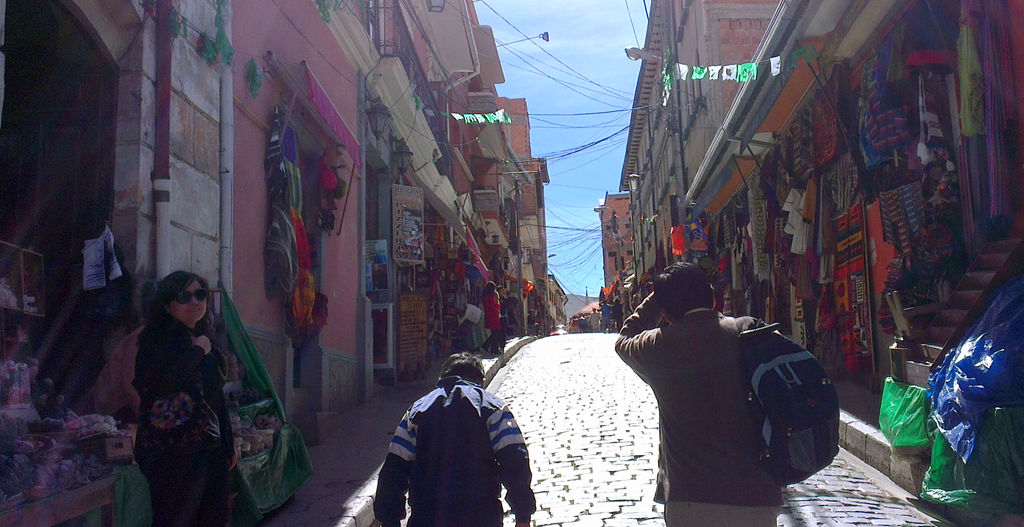
La Calle de las Brujas, La Paz, Bolivia

La Calle de las Brujas, La Paz, Bolivia

La Paz Bolivia has a very special significance for Joyaviva. It is the home of El Ekeko, the inspiration of Angela Cura Mendes El Ekeko Proyecto and represents an original take on luck in South America. This Andean god of abundance is the centrepiece of a festival known as the Alisitas, when people exchange miniature versions of consumer goods. The city has an entire mini-economy devoted to the fabrication of miniature tools, cars, money, food and even certificates. These all go on sale at noon, 24 January, where the city’s population gathers to purchase the object of their and others desires.

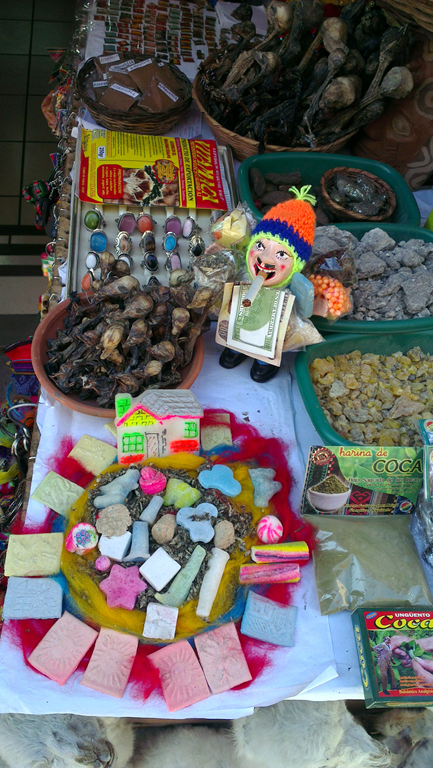
On other times of the year, you can supply your wishful thinking at the Calle de las Brujas (Street of the Witches). All along the street are shops selling amulets, votive offerings, charms, herbal medicines and the ubiquitous llama foetus. It’s an extraordinary display of invention and ritual that both attracts and repulses. The Joyaviva challenge is to find ways of drawing on this amazing heritage without reverting to primitivism.

Bolivia is a fascinating stage in the Joyaviva journey. Though it is the poorest country in Latin America, it is incredibly rich in popular culture. There is a great love of festivals, featuring stunning parades in the Fiesta de Gran Poder and Carnival. It is also the most strongly indigenous country in the continent, with a President who proudly follows his Aymara heritage. Politically, Bolivia aspires to world leadership in climate change, presenting the figure of Pachamama (mother earth) as a global ideal.

Estaban Avendaño, a jeweller to the Cholitas, the ultimate connoisseurs of style in La Paz.

Estaban Avendaño, a jeweller to the Cholitas, the ultimate connoisseurs of style in La Paz.

One of the distinctive features of La Paz is the indigenous woman, known as cholita, who dresses in a distinctive derby hat (bombin). Forced to adopt European clothes by their Spanish masters, the indigenous women decided to craft their own image from variety of disparate sources. In what might be considered Andean bling, the women wear multilayed skirts often embroidered with glistening metal thread. Jewellery is taken very seriously, particularly when attached to the hat. The women commission specific pieces that relate to their identity, featuring ornate animals or mythical figures.

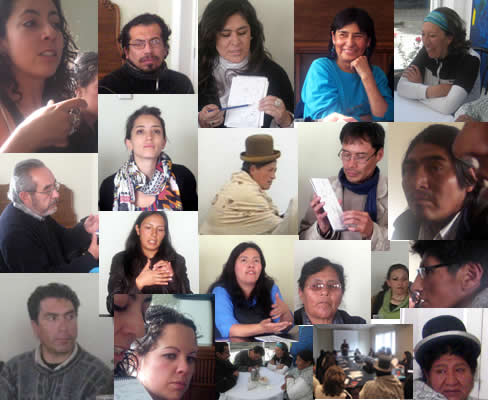
Joyaviva itself is blessed with a wonderful partner in Bolivia. The Jalsuri Foundation works with artisans across the country hosting workshops and developing quality craft product that they sell in their shops. Under the leadership of Daniela Viscara, they gathered a fascinating combination of artists, jewellers, designers and artisans for the Joyaviva workshop. She gave an outline of the design process and her colleague the historian Silvia Azre presented a fascinating genealogy of El Ekeko. The dialogue between Western, Latin and indigenous cultures proved quite fertile. So what did they come up with?

Workshop participants in La Paz

Workshop participants in La Paz

That week in La Paz had been quite difficult. The bus drivers had blockaded the city, making it impossible for people to get to work or the shops. And then in the weekend, a large group protesting against the blockades themselves disrupted the city. It’s no surprise then that one of the situations they identified as needing luck was the task of getting to work each day. While this might be taken for granted in most other cities, in La Paz it might be considered a blessing to actually arrive at work in the morning. Other work related concerns included having for a job interview and sitting an exam. These were very different from the traditional contexts for amulets, which included fertility, good harvest and personal wealth. Might there be a new generation of Bolivian amulets relevant to the needs of a modern city?

The Alisatas Festival that holds particular promise. While over-consumption is recognised as producing great strain on the environment, a decline in consumer demand is seen as stalling the world economy. Alisatas is a celebration of desire and consumption, yet because the items are miniature, this has a positive effect on the local economy. In the Western version of Alisatas, known as Christmas, the ultimate gratitude for all the goods we unwrap is to say ‘But this is exactly what I wanted. How did you know?’ Perhaps the recognition of desire is more important than its satisfaction. If this is so, then the Alisatas is the perfect way of bringing people together.

The particular desire for Joyaviva is to have the exhibition in La Paz at the same time as Alasitas. This not only touches on the spirit of the project, it also provides a generative platform for the burgeoning jewellery network. After all, rendering the world in miniature is a special power of the jeweller.